Stones in
bile duct

What are Bile Duct Stones?

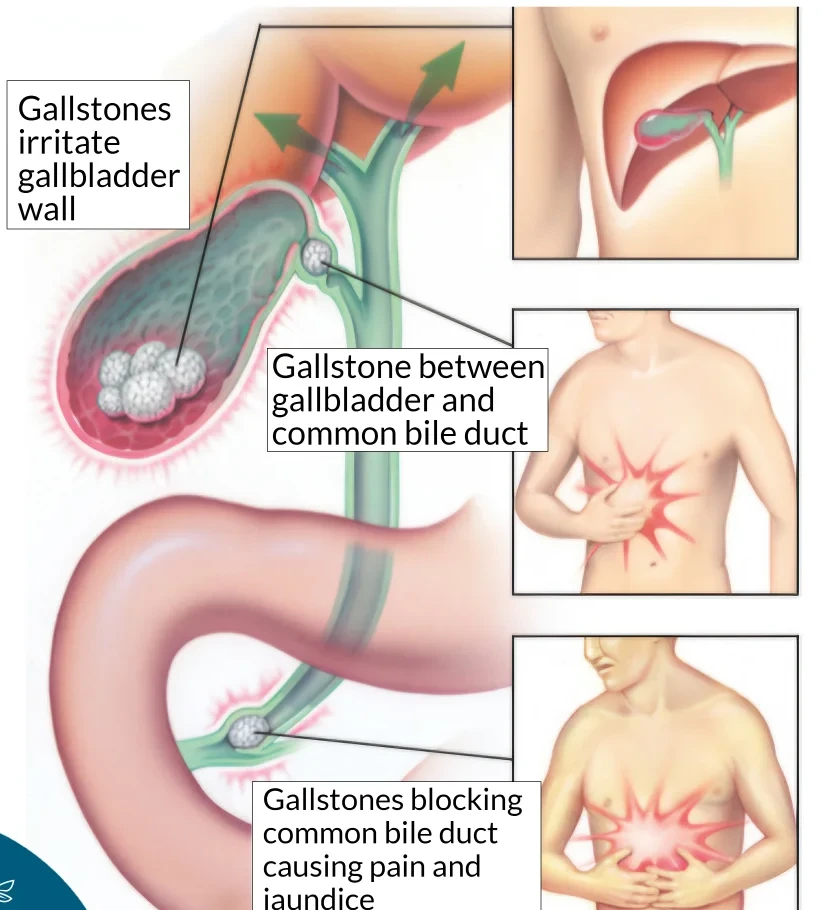
Bile duct stones, also known as choledocholithiasis, are stones that form inside or get lodged in the bile duct — the tube that carries bile from the liver and gallbladder to the small intestine. These stones can block the normal flow of bile, leading to pain, infection, or jaundice.

What are the types of Bile Duct Stone?

There are two main types of bile duct stones:

  1. Primary bile duct stones: These form directly within the bile ducts, often due to infection, bile stasis, or narrowing (stricture) of the ducts.
  2. Secondary bile duct stones: These are more common and develop first in the gallbladder, then move into the bile duct.

What is the common cause of a Bile Duct Stone?

The most common cause is the migration of gallstones from the gallbladder into the bile duct. Other causes include:

  • Narrowing or scarring of the bile ducts
  • Bile infection or inflammation (cholangitis)
  • Abnormal bile composition leading to stone formation
  • Previous gallbladder surgery (stones forming after removal)

What are the symptoms of a Bile Duct Stone?

Symptoms may vary depending on the severity of the blockage but commonly include:

  • Severe upper abdominal pain, especially in the right upper or middle abdomen
  • Jaundice (yellowing of skin and eyes)
  • Dark urine and pale stools
  • Fever and chills, especially if an infection (cholangitis) has developed
  • Nausea and vomiting
  • Itching (due to bile buildup in the skin)
  • Loss of appetite or fatigue

These symptoms usually occur because the stone blocks the flow of bile, causing pressure buildup in the bile ducts or infection.
What investigations are needed to diagnose a Bile Duct Stone?

At The Best Gastro Care Centre we use a combination of blood tests and imaging studies to confirm the diagnosis:

  • Liver function tests (LFTs): To check for bile duct obstruction
  • Ultrasound scan: First-line test to detect stones in the gallbladder or bile ducts
  • MRCP (Magnetic Resonance Cholangiopancreatography): A non-invasive MRI scan to visualize bile ducts and detect stones
  • Endoscopic Ultrasound (EUS): Provides detailed images of the bile ducts
  • ERCP (Endoscopic Retrograde Cholangiopancreatography): Used for both diagnosis and treatment by removing the stones endoscopically

What are the treatment options available for a Bile Duct Stone?

Treatment depends on the size, number, and location of the stones:

  • ERCP (Endoscopic Retrograde Cholangiopancreatography): The most common and effective procedure to remove stones using an endoscope passed through the mouth into the bile duct.
  • Laparoscopic or open surgery: If ERCP is not possible or fails, stones may be removed surgically, often combined with gallbladder removal.
  • Percutaneous drainage: Used in rare cases when endoscopic access is difficult.
  • Antibiotics: Prescribed if there is an associated infection (cholangitis).
At The Best Gastro Care Centre

Your Health, Our Priority

Our expert team provides world-class treatment for gastrointestinal diseases using advanced techniques and compassionate care.

📞 Book your appointment today to consult our specialist gastro for timely diagnosis and treatment.