
Gall Stones
( Gall Bladder Stones)
of bile that can form in your gallbladder.
Call now
What are Gall Stones?
Gallstones are hardened concentrated pieces (deposits) of bile that can form in your gallbladder.
How many Gall Bladder Stones are usually found?
Gallstones range in size from as small as a grain of sand to as large as a golf ball. Some people develop just one gallstone, while others develop many gallstones at the same time.
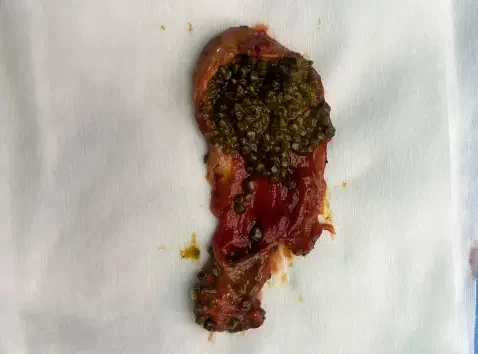
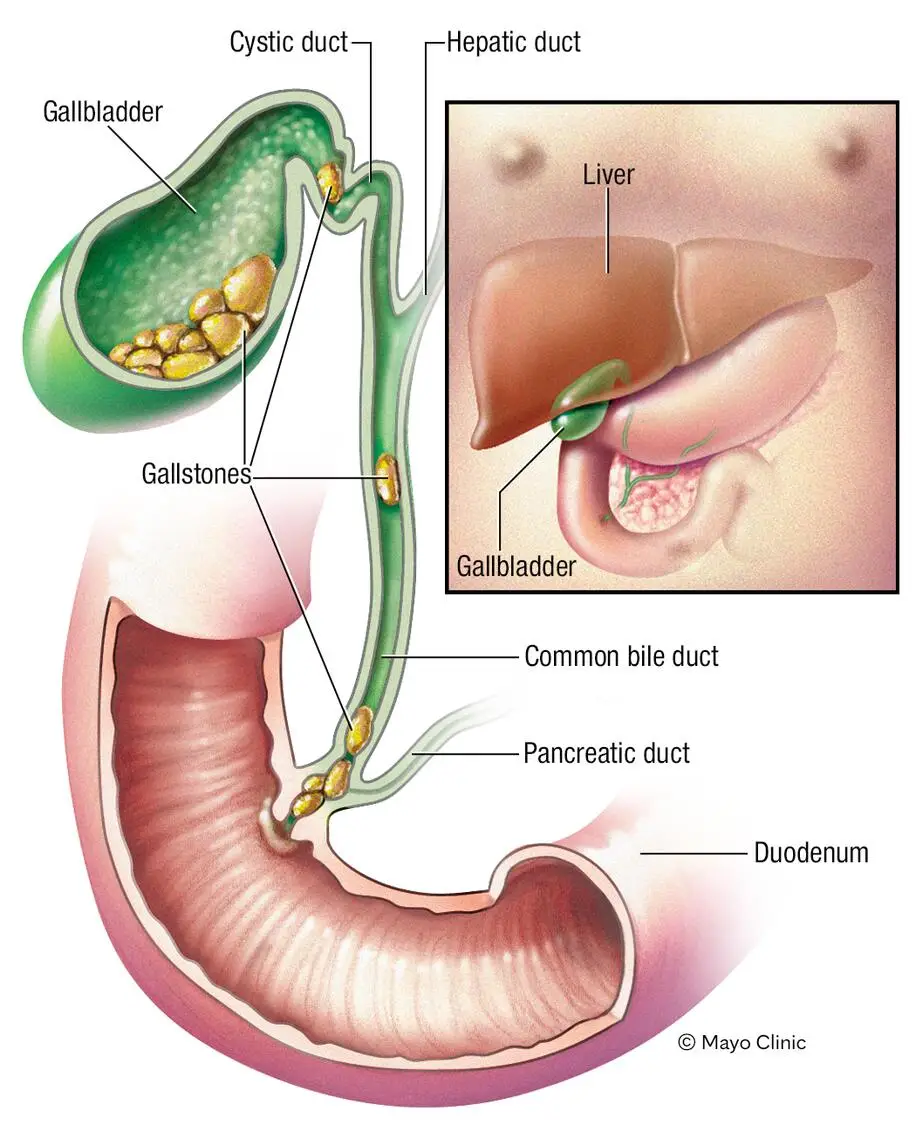
What is a Gall Bladder?
A gallbladder is a small, pear-shaped organ on the right side of your abdomen, just beneath your liver. Bile is a digestive fluid produced in your liver and stored in your gallbladder. When you eat, your gallbladder contracts and empties bile into your small intestine (duodenum) through a small tube called bile duct.
What are the symptoms of Gall Stones?
Gall stones can stay asymptomatic for some but in others can cause significant health problems
- Severe upper abdominal pain, may spread to the back also
- Upper abdominal pain which is on and off, increases on eating oily, fried , spicy food or non vegetarian food
- Abdominal pain with fever
- Jaundice
- Sudden and rapidly intensifying pain in the center of your abdomen, just below your breastbone
- Back pain between your shoulder blades
- Pain in your right shoulder
- Nausea or vomiting
- Yellow tint to your skin and eyes
- Dark-colored pee and light-colored poop
What is Gallstone pain like?
Typical gallstone pain is sudden and severe and may make you sick to your stomach. This is called a gallstone attack or gallbladder attack. You might feel it most severely after eating oily fried food or non vegetarian food, when your gallbladder contracts, creating more pressure in your biliary system. It might wake you from sleep.
Gallstone pain that builds to a peak and then slowly fades is called biliary colic. It comes in episodes that may last minutes to hours. The episode ends when and if the stone moves or the pressure eases. People describe the pain as intense, sharp, stabbing, cramping or squeezing. You might be unable to sit still.
Gallstone pain may last several minutes to a few hours
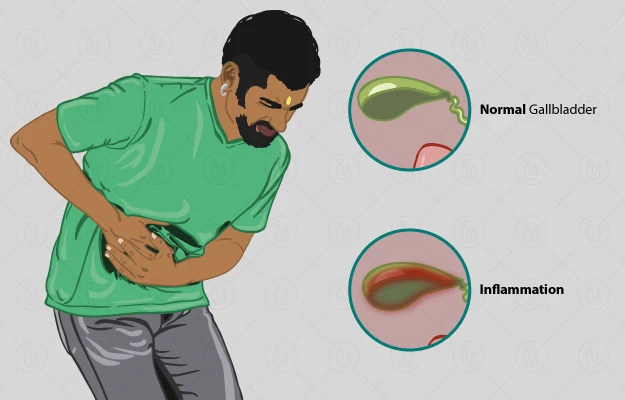
Are Gallstone symptoms Different in a female?
No, but females may be more likely to experience referred pain — pain that you feel in a different place from where it started. So, they may be more likely to experience gallstone pain in their arm, shoulder, chest or back.
Females are also more prone to chronic pain, and they may be more likely to dismiss pain that comes and goes, like biliary colic does. It’s important to see a doctor about any severe or recurring pain, even if it goes away. Once you’ve had a gallstone attack, you’re likely to have another.
What causes Gall stones?
Gallstones form when there’s an excess of one of the main ingredients in bile (Excess cholesterol or excess bilirubin)
The excess ingredient turns to sediment at the bottom of your gallbladder or bile ducts, and the sediment gradually hardens into stones. Cholesterol stones are the most common type in the western population and pigment (bilirubin) stones are more common in India.
Poor gall bladder emptying
Not enough bile acids (bile salts) in your bile
Haemolytic anemias: Breakdown of red blood cells with increased bilirubin production
But not everyone with gallstones has an underlying condition.
What are the risk factors for developing Gall stones?
Age
Gallstones take time to develop and grow large enough to cause an obstruction. Males are more likely to get them after age 60. Females are more likely to get them during their fertile years, roughly between the ages of 20 and 50.
Hormones
Females are three times more likely to get gallstones. Their risk peaks and declines with their estrogen and progesterone levels. Estrogen increases cholesterol levels, while progesterone slows your gallbladder from emptying.
Weight
Body fat releases estrogen, so having more of it raises your estrogen levels and your cholesterol levels. On the other hand, rapid weight loss, like after weight loss surgery, can also cause gallstones. Losing body fat quickly releases large loads of cholesterol into your bile.
Genetics
If you’re of Native American or Mexican descent, your genetic profile makes you more prone to higher cholesterol levels in your bile, leading to gallstones. If you have a family history of gallstones, you may be more likely to develop them, regardless of your racial heritage.
What happens when Gall bladder stones are left untreated?
Gallstones can become dangerous if they start to travel through your biliary tract and get stuck somewhere. They can clog up your biliary tract, causing pain and serious complications.
The problem with gallstones is that they grow slowly, but surely as bile continues to wash over them and leave another layer of sediment.
What begins as a grain of sand can grow big enough to stop the flow of bile, especially if it gets into a narrow space, like
-
Neck of gall bladder- bile cannot drain out-empyema gall bladder
-
Bile duct- bile flow obstructed -Jaundice (bile in your bloodstream)
-
In the lower end- gallstone pancreatitis ( pancreas inflammation)
Other complications include
Cholecystitis (gallbladder inflammation)
Cholangitis (bile duct inflammation)
Hepatitis (liver inflammation)
Jaundice (bile in your bloodstream)
Septicemia (an infection in your bloodstream)
Gall bladder cancer
How common are Gallstones (Cholelithiasis)?
In India, it’s about 2-29% of the population with some regions like the North having a very high incidence of gall stones. Symptomatic gall stones are rising due to change in life style, food habits
What are the investigations needed to diagnose and treat Gall Stones?
Ultrasound scan
The best modality to know the presence of gallstones, inflammation of gall bladder wall (cholecystitis)
MRCP
shows the bile duct stones
CT abdomen
in very sick patients with pus in gall bladder, perforated gall bladder, suspicion of gall stone pancreatitis
HIDA scan
when atypical symptoms suggest delayed gall bladder emptying
EUS (endoscopic ultrasound)
to rule out bile duct stones
What are the treatment options available for Gall bladder stones?
Asymptomatic patients with a single large stone can usually be observed.People with multiple small stones and diabetics where chances of gall stone related complications are high need surgical removal of gall bladder.
What is the treatment for symptoms due to Gall bladder stones?
Any symptomatic patient needs surgical removal of gall bladder( cholecystectomy). Once gallstones have caused a blockage or symptoms, they’re highly likely to do so again.
Medical treatment for gall stones
Doctors don’t prescribe medications for gallstones very often because they aren’t very effective. Medications like ursidol and chenodiol only work on smaller cholesterol stones that haven’t caused any complications yet. It can take months to years to dissolve them, and they often return. In India, most of the stones are pigment stones which never dissolve with medication, they are hard and will not dissolve with medication.
Surgical treatment of gall stones
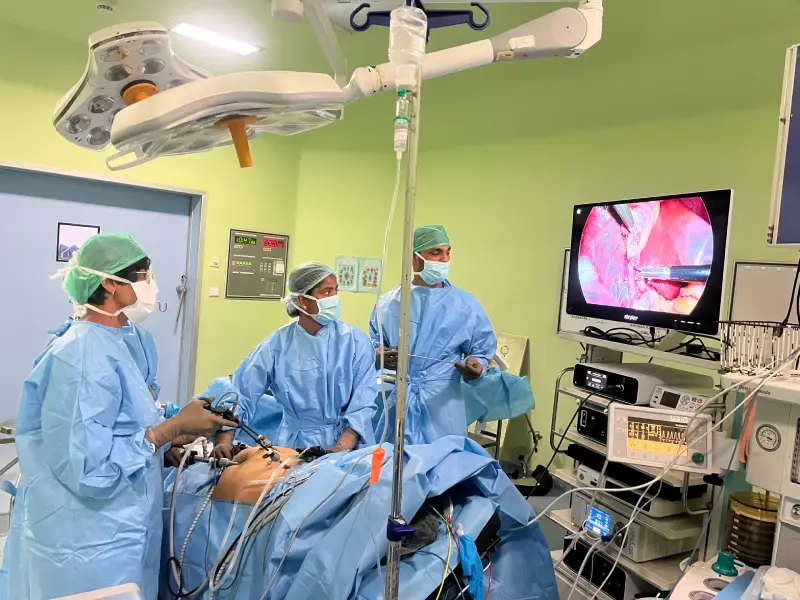
The surgical treatment of gall stones is by cholecystectomy – removal of the entire gall bladder. This can be done by laparoscopy or open surgery
Who can undergo Laparoscopic Cholecystectomy?
A patient fit for general anaesthesia can undergo laparoscopic cholecystectomy.
What is Laparoscopic Cholecystectomy?
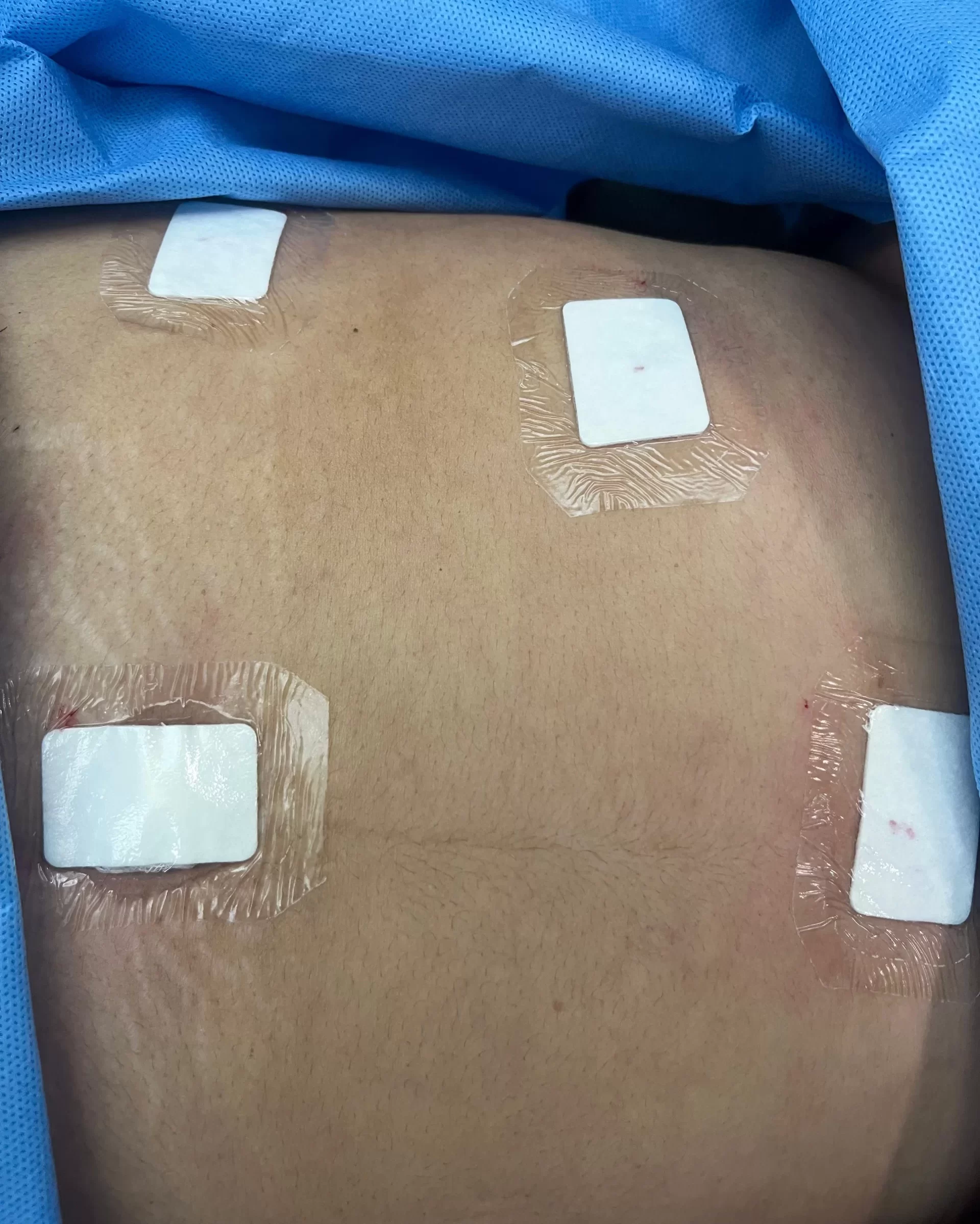
By 3-4 tiny incisions(5mm-1 cm) , with a laparascope, the gall bladder is removed fully.
What are the advantages of Laparoscopic cholecystectomy?
It’s minimally invasive, no big scars, quick recovery, return to normal activity and work is very fast. Post operative pain is also very less
How long should one be in the hospital after laparoscopic cholecystectomy ?
1-2 days including the day of surgery. Patients are allowed to walk, eat light food 6- 8 hours after surgery
When is open cholecystectomy indicated?
- In patients who are not fit for general anaesthesia like cardiac problems, lung problems etc undergo open cholecystectomy under regional anaesthesia
- Multiple surgeries done in upper abdomen previously makes access to laparoscopy very difficult
- When converting from a laparoscopic to open cholecystectomy.Extensive inflammation, adhesions, anatomical variances, bile duct injury, retained bile duct stones, and uncontrolled bleeding are all indications to convert to an open procedure. The need for a common bile duct exploration also can be a reason to convert to an open procedure, as laparoscopic bile duct exploration can sometimes be difficult.
What are the warning signs in a patient with gallbladder stones?
In a patient with gall bladder stones
- Sudden onset of severe abdominal pain
- Sudden onset of fever with chills
- Yellowish discoloration of eyes
- Passing dark colored urine
- Passing pale clay coloured stools
Frequently Asked Questions (FAQs)
There’s no sure way to prevent gallstones from forming, but you can take certain steps to reduce your overall risk.
Role of Diet: Reducing cholesterol / fatty food in your diet lowers the risk of cholesterol stones. However, this won’t prevent pigment stones which are more common in India.
Role of weight loss: If you are overweight or obese, losing some weight can reduce your risk of cholesterol stones.
But losing weight fast can raise your risk. If you’re expecting rapid weight loss from a procedure or other treatment, medicines are given to prevent occurrence of gall stones
If the gall bladder is left inside the body, the primary problem of Gallbladder dysfunction and the concentrated bile are not treated , so the gallstones form again. So it’s of no use removing the gallstones only.
Gall bladder is a storage organ, not involved in production or excretion of substances. So, no side effects generally occur. In absence of gall bladder, bile directly flows from liver into the small intestine.
No. Gall bladder is only a storage organ. Digestion does not need a gall bladder to be present. So, digestion of food is not affected by cholecystectomy.
Symptoms often occur after heavy meals, bending, lifting objects, or lying down, particularly on the back.