
GERD is the reflux of stomach contents back into the esophagus (food pipe). This means food, mixed with acid and bile, enters the food pipe, causing irritation of its lining, which gives rise to a variety of symptoms and problems.
When you have acid reflux once in a while, it’s typically considered a temporary condition. However, when you experience heartburn more than twice a week for several consecutive weeks, it is classified as Gastroesophageal Reflux Disease (GERD). GERD is the chronic, more severe form of acid reflux.
Common symptoms include:
• A burning sensation in the chest, often called heartburn. This typically occurs after eating and may worsen at night or while lying down.
• Regurgitation: The sensation of acid or sour liquid backing up into your throat or mouth, sometimes producing “wet burps.”
• Upper belly or chest pain.
• Dyspepsia (Indigestion): Can include burping, nausea after eating, or a sensation of stomach fullness/bloating.
• Globus sensation: Feeling like you have a lump in your throat or a feeling of fullness there, often leading to repeated throat clearing.
• Acid reflux chest pain: Pain in the esophagus can be felt in the chest and may not feel like burning. Because the heart and esophagus share nerves, this pain can sometimes mimic a heart attack (a heart attack must always be ruled out first).
Night time/Chronic symptoms may include:
• An ongoing or chronic dry cough.
• Hoarseness (laryngitis) due to inflammation of the vocal cords.
• New or worsening asthma.
• Bad breath when stomach contents wash back up.
• Teeth erosions due to repeated acid exposure.
The problem stems from the Lower Esophageal Sphincter (LES), a muscular valve connecting your esophagus to your stomach. The LES’s job is to keep stomach acid contained. If this valve relaxes or doesn’t close properly, acid can flow backward (reflux) into the esophagus.
• Eating very late at night.
• Living a sedentary lifestyle or going to sleep immediately after eating.
• Consuming trigger foods such as spicy foods, excessive ginger/garlic, chocolates, caffeine, tea, coffee, and carbonated/fizzy drinks.
• Smoking and alcohol consumption.
• Being overweight or obese.
• Pregnancy, due to increased abdominal pressure and hormonal changes.
• Delayed stomach emptying (gastroparesis).
• Connective tissue disorders such as rheumatoid arthritis, scleroderma, or lupus.
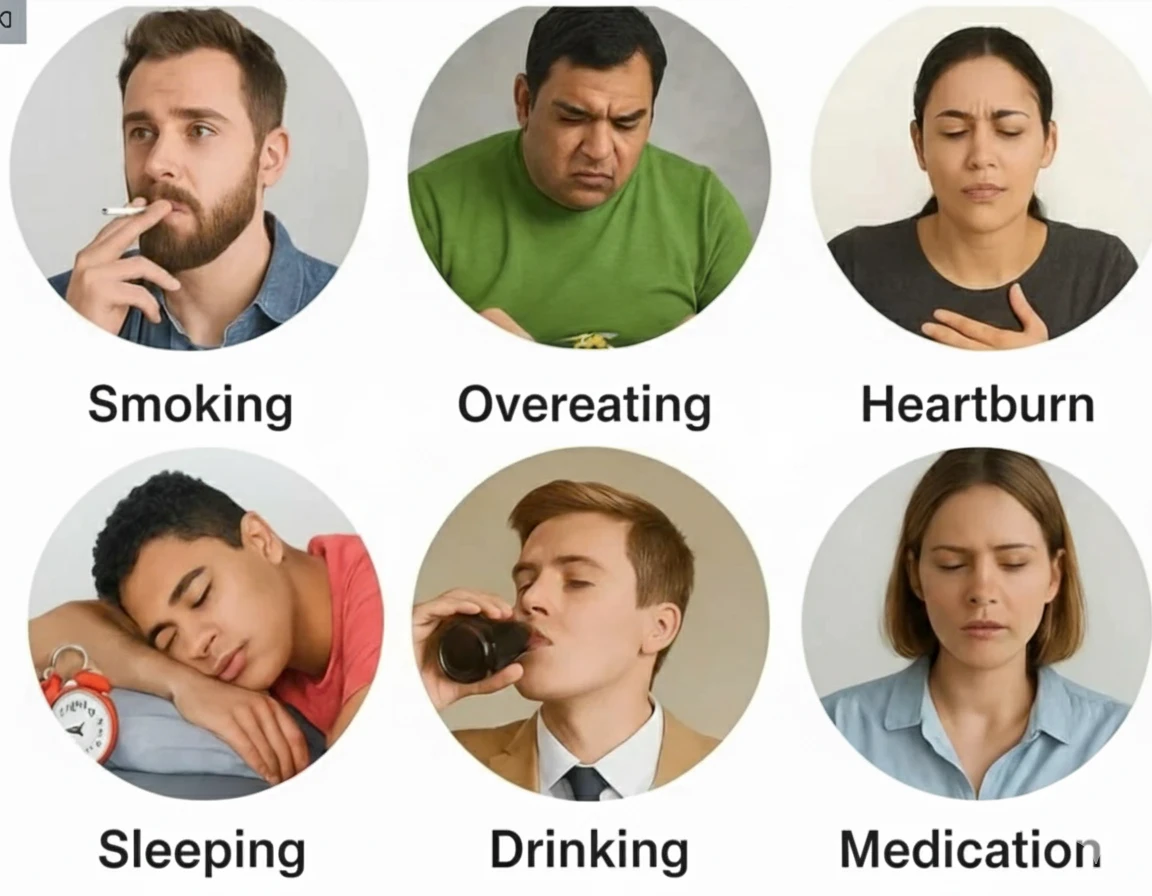
A thorough history taken by a doctor is often enough to diagnose GERD. Endoscopy is typically not required for a standard diagnosis but is necessary in cases of atypical presentations (such as chronic cough or sudden-onset asthma) or complications (such as difficulty swallowing). In such complex cases, additional tests like 24-hour pH monitoring and manometry may be performed.
No medicine is as effective as changing your lifestyle. Key changes include:
Medical drugs (e.g., those reducing acid secretion or increasing stomach emptying) are useful initially, particularly when symptoms are severe, but are typically prescribed only for a few weeks.

Acid reflux is when stomach acid flows back into the food pipe (esophagus). Heartburn is the burning feeling in the chest that happens because of acid reflux
Indigestion (dyspepsia) is a broad term describing general discomfort or pain in the upper belly after eating. Reflux is just one of the many possible causes of indigestion.
Yes. If stomach acid travels high enough to reach your airways, it can cause them to contract or narrow. This can lead to shortness of breath or wheezing, which may be mistaken for asthma.
Yes. It may present with severe chest pain that closely mimics a heart attack. Due to this potential confusion, a heart attack must always be ruled out first by relevant investigations in the hospital. Please visit a doctor immediately if you experience severe chest pain.
Symptoms most often happen:
To lessen your symptoms, try avoiding:
Habits that can make reflux worse include:
Some medicines can make symptoms worse, often because they relax your LES. They include:
Always consult your doctor before stopping or changing any prescribed medication.
Untreated GERD could potentially lead to:
Call your doctor right away if you have any “alarming” symptoms:
Other symptoms that should prompt a call if they persist or don’t let up include:
If you are struggling with persistent acid reflux symptoms, schedule an appointment with our gastroenterology experts today. Breathe easier and enjoy your meals again!